
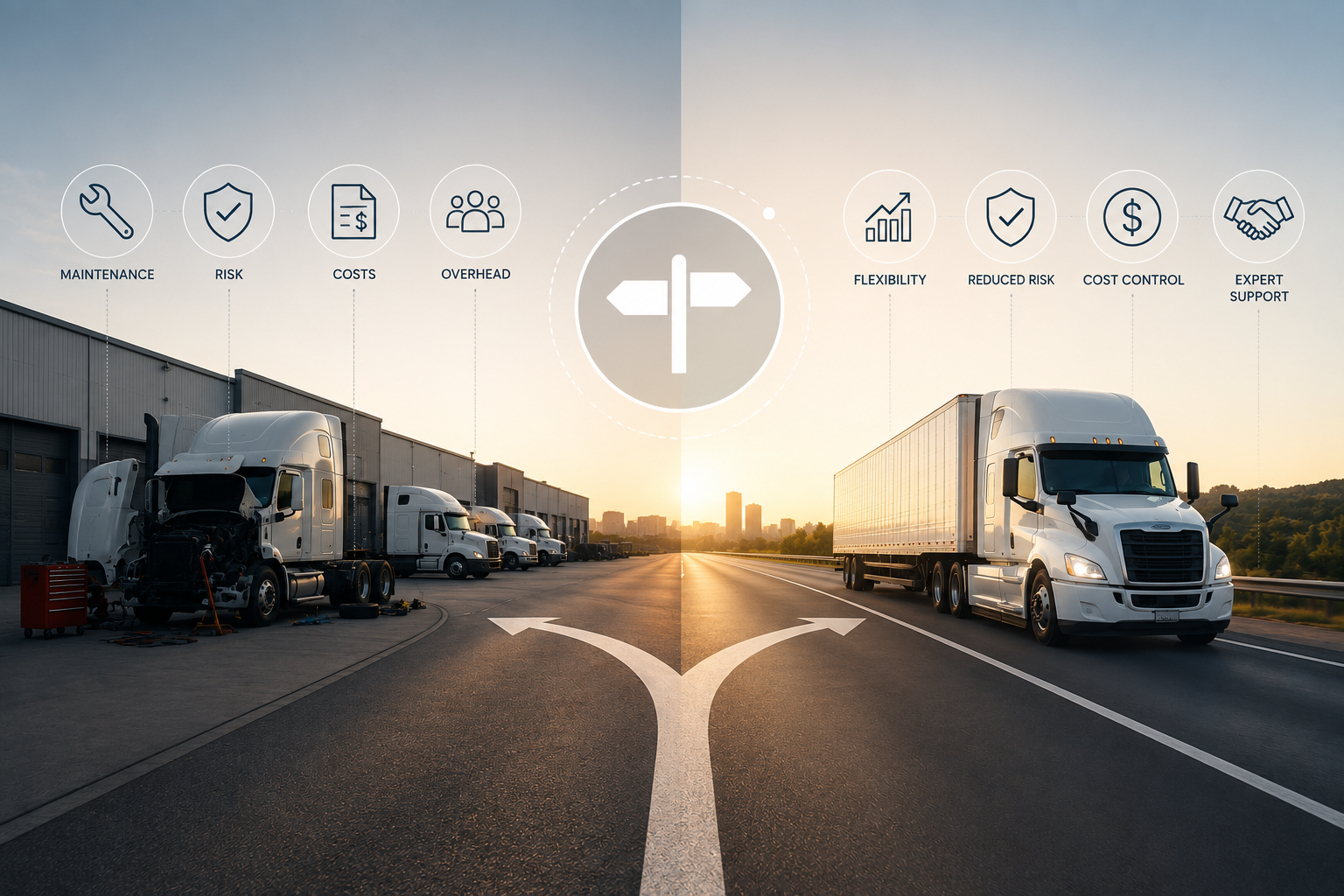
Transportation has become one of the most strategic functions in the modern supply chain. What was once viewed primarily as a cost center is now recognized as a competitive advantage—or a competitive liability. Rising labor costs, persistent driver shortages, inflationary pressures on equipment and maintenance, increasingly complex regulations, and growing customer expectations have forced executives to take a fresh look at how freight moves through their organizations.
For companies operating a private fleet, the question is no longer simply whether they can deliver products on time. Instead, executives are asking whether their transportation model continues to be the most effective use of capital, people, and operational resources.
At the same time, transportation outsourcing has evolved significantly. Today’s Dedicated Contract Carriage (DCC) providers deliver much more than trucks and drivers. Many serve as long-term transportation partners, providing technology, fleet optimization, performance analytics, maintenance expertise, safety management, and continuous improvement initiatives that rival—or exceed—the capabilities of many internal transportation departments.
The reality is that there is no universally correct answer. For some organizations, maintaining a private fleet remains the best strategic choice. For others, outsourcing transportation can reduce costs, improve service, and allow internal teams to focus on core business priorities.
This executive guide explores both approaches objectively, helping transportation leaders evaluate which model best aligns with their organization’s financial goals, operational requirements, customer expectations, and long-term growth strategy.
Understanding the Three Primary Transportation Models
Organizations generally move freight using one of three models.
Private Fleet
A private fleet consists of vehicles operated exclusively for a company’s own freight. The company typically manages drivers, maintenance, equipment procurement, compliance, routing, scheduling, technology, and operational oversight.
Private fleets provide maximum operational control but require significant internal expertise and investment.
Dedicated Contract Carriage (DCC)
Dedicated Contract Carriage is a long-term transportation partnership in which a provider supplies dedicated drivers, equipment, maintenance, management, technology, and operational support under a customized service agreement.
Unlike transactional freight, DCC creates a transportation operation designed specifically around one customer’s network, service levels, and business objectives.
Common Carrier Transportation
Common carriers transport freight for multiple customers, generally on a shipment-by-shipment basis.
This model works well for fluctuating freight volumes but typically offers less consistency and operational control than either a private fleet or dedicated transportation.
The Benefits of Operating a Private Fleet
Private fleets continue to provide substantial advantages for organizations with specialized transportation needs.
Complete Operational Control
Companies determine:
● Driver standards
● Equipment specifications
● Delivery schedules
● Customer interactions
● Operational policies
● Branding standards
This level of control can be particularly valuable for businesses with highly specialized delivery requirements.
Brand Visibility
Every truck represents the organization.
Well-maintained branded equipment reinforces professionalism while increasing visibility throughout delivery regions.
Dedicated Drivers
Private fleet drivers often develop strong customer relationships through consistent routes and long-term familiarity with facilities and delivery requirements.
Specialized Equipment
Organizations with highly customized equipment needs may benefit from maintaining direct ownership and control over fleet assets.
Examples include:
● Refrigerated trailers
● Liftgate equipment
● Foodservice delivery vehicles
● Specialized manufacturing transport
● Multi-temperature trailers
Consistent Customer Experience
Private fleets allow organizations to maintain direct oversight of customer interactions, delivery standards, and service quality.
Greater Scheduling Control
Because equipment and drivers are dedicated exclusively to company operations, organizations often enjoy greater flexibility when responding to changing customer requirements.
The Hidden Costs of a Private Fleet
The visible expenses of operating a fleet rarely represent its true financial impact.
Executives evaluating private fleet operations should consider the complete total cost of ownership, including indirect and often overlooked expenses.
Driver Recruiting and Retention
The transportation labor market remains highly competitive. Hidden costs include:
● Recruiting expenses
● Hiring incentives
● Training
● Onboarding
● Driver turnover
● Temporary staffing
● Lost productivity
Replacing a commercial driver involves much more than simply filling an open position.
Equipment Acquisition
Fleet ownership requires substantial capital investment.
Costs include:
● Tractors
● Trailers
● Specialized equipment
● Financing
● Registration
● Taxes
● Depreciation
Capital tied up in transportation assets may reduce financial flexibility for other strategic investments.
Fleet Maintenance
Maintenance expenses extend well beyond scheduled service.
Organizations must budget for:
● Preventive maintenance
● Emergency repairs
● Tires
● Breakdowns
● Replacement parts
● Shop equipment
● Technician labor
● Downtime
Unexpected repairs can significantly disrupt operations while increasing overall fleet operating costs.
Regulatory Compliance
Compliance responsibilities continue to expand.
Organizations must manage:
● Hours of Service
● Driver Qualification Files
● DOT inspections
● CSA performance
● Drug and alcohol testing
● Electronic Logging Devices (ELDs)
● Vehicle inspections
● Licensing requirements
Compliance failures can result in fines, litigation, and reputational damage.
Insurance
Commercial fleet insurance continues to rise.
Costs are influenced by:
● Claims history
● Vehicle age
● Driver safety performance
● Fleet size
● Industry risk
Insurance represents one of the least predictable transportation expenses.
—
Technology Investments
Modern fleet management increasingly relies on technology, including:
● Transportation Management Systems (TMS)
● Fleet telematics
● Route optimization
● Dash cameras
● Electronic logging
● Maintenance software
● Fuel management
● Predictive analytics
Technology improves visibility but requires ongoing investment and support.
Administrative Overhead
Managing transportation requires dedicated personnel.
These may include:
● Fleet managers
● Safety managers
● Driver supervisors
● Compliance specialists
● Dispatchers
● Payroll administrators
● Recruiting staff
These indirect costs are often excluded when companies compare transportation models.
Downtime
Vehicle downtime affects more than maintenance budgets.
It can lead to:
● Missed deliveries
● Customer dissatisfaction
● Rental equipment
● Overtime
● Productivity losses
Equipment Replacement
Fleet lifecycle planning requires continuous capital allocation.
Waiting too long increases repair costs.
Replacing equipment too early reduces return on investment.
Finding the optimal replacement cycle requires sophisticated fleet management.
Seasonal Capacity
Many industries experience seasonal spikes.
Maintaining sufficient equipment year-round for peak demand often results in underutilized assets during slower periods.
What Is Dedicated Contract Carriage?
Dedicated Contract Carriage is often misunderstood as simply outsourcing transportation.
In reality, DCC is a strategic transportation partnership designed around the customer’s operation.
A DCC provider typically manages:
● Driver recruiting
● Safety programs
● Fleet management
● Equipment maintenance
● Regulatory compliance
● Performance reporting
● Technology
● Route optimization
● Continuous improvement
Rather than purchasing transportation one shipment at a time, companies receive a customized transportation operation aligned with defined service expectations.
Typical DCC agreements include:
● Multi-year contracts
● Clearly defined service level agreements (SLAs)
● KPI reporting
● Operational reviews
● Continuous improvement initiatives
● Cost transparency
● Scalability planning
Depending on business requirements, equipment may be customer-owned, provider-owned, or leased.
Private Fleet vs. Outsourcing Comparison
Which Transportation Model Fits Your Business?
Every industry has unique transportation requirements.
Grocery Distribution
Fresh products, strict delivery windows, and frequent deliveries often make both private fleets and dedicated transportation attractive.
Organizations seeking predictable costs and scalable capacity often benefit from DCC.
Foodservice
Foodservice operations frequently require:
● Multi-stop routes
● Refrigerated equipment
● Specialized handling
● Customer service excellence
Dedicated transportation often provides consistent service while reducing management complexity.
Manufacturing
Manufacturers often value production synchronization and delivery reliability.
Private fleets may work well for stable networks, while growing operations often benefit from dedicated transportation partnerships.
Retail
Retail distribution requires flexibility during seasonal demand spikes.
DCC allows retailers to expand capacity without purchasing additional equipment.
Consumer Packaged Goods (CPG)
CPG companies frequently balance service consistency with cost efficiency.
Dedicated transportation can provide dedicated capacity while improving transportation cost management.
Industrial Distribution
Industrial operations often require specialized equipment and customer-specific delivery processes.
The right model depends on shipment complexity, geography, and growth plans.
Signs It May Be Time to Reevaluate Your Fleet Strategy
Transportation strategies should evolve alongside business needs.
Organizations should reassess their model if they experience:
● Persistent driver shortages
● Rising maintenance expenses
● Aging fleet assets
● Declining on-time performance
● Increasing insurance costs
● Rapid geographic expansion
● Difficulty scaling operations
● Growing capital constraints
● Higher compliance complexity
● Escalating transportation costs
These indicators often signal that current fleet strategies deserve closer examination.
How Leading Companies Are Reducing Transportation Costs Without Sacrificing Service
Today’s transportation leaders focus on continuous improvement rather than simple cost reduction.
Key strategies include:
Data-Driven Fleet Management
Executives increasingly rely on operational data rather than assumptions when making transportation decisions.
KPI Reporting
High-performing transportation operations monitor:
● Cost per mile
● On-time delivery
● Asset utilization
● Empty miles
● Fuel efficiency
● Driver turnover
● Preventive maintenance compliance
● Safety performance
Route Optimization
Advanced routing technologies reduce:
● Fuel consumption
● Driver hours
● Empty miles
● Delivery delays
—
Fleet Technology
Technology provides visibility into:
● Vehicle health
● Driver behavior
● Maintenance scheduling
● Customer service performance
● Equipment utilization
Performance Benchmarking
Comparing transportation performance against industry benchmarks helps identify improvement opportunities.
Driver Retention Programs
Stable driver workforces improve safety, customer relationships, and operating efficiency.
Continuous Improvement
Successful transportation operations treat optimization as an ongoing process rather than a one-time initiative.
Questions Every Executive Should Ask Before Making a Transportation Decision
Before choosing between a private fleet vs. outsourcing, transportation leaders should ask:
1. What is our true cost per mile?
2. What is our driver turnover rate?
3. How much capital is tied up in fleet assets?
4. How often do vehicles experience downtime?
5. Are maintenance costs increasing?
6. Can we support future growth?
7. What service levels do customers require?
8. Are we meeting delivery expectations?
9. How efficient are our routes?
10. What technology gaps exist?
11. Are compliance requirements becoming more difficult?
12. How much administrative effort supports transportation?
13. What risks concern executive leadership most?
14. How flexible is our current transportation model?
15. Are transportation costs predictable?
16. Could internal resources be focused on higher-value initiatives?
17. Are we maximizing equipment utilization?
18. How frequently do unexpected transportation issues disrupt operations?
Making the Right Long-Term Transportation Decision
Choosing the appropriate transportation model requires balancing multiple priorities.
A practical decision framework should evaluate:
Financial Considerations
● Total cost of ownership
● Capital requirements
● Cash flow
● Return on investment
Operational Priorities
● Service reliability
● Delivery flexibility
● Customer expectations
● Geographic coverage
Growth Plans
● Expansion markets
● Capacity needs
● Seasonal fluctuations
● Business acquisitions
Risk Tolerance
● Compliance exposure
● Driver availability
● Equipment reliability
● Insurance costs
Internal Resources
● Transportation expertise
● Management capacity
● Maintenance capabilities
● Recruiting resources
Technology
● Visibility
● Reporting
● Fleet optimization
● Predictive analytics
Organizations that periodically reassess these factors are better positioned to build transportation strategies that support long-term business objectives.
Conclusion
The debate over private fleet vs. outsourcing is not about identifying a universally superior transportation model. It is about determining which approach best aligns with your organization’s operational goals, financial strategy, customer commitments, and long-term vision.
For some companies, maintaining a private fleet provides the control, specialization, and customer experience required to support their business. For others, Dedicated Contract Carriage offers a way to reduce administrative complexity, improve cost predictability, access specialized transportation expertise, and scale operations without significant capital investment.
The most successful organizations regularly evaluate their transportation strategy rather than assuming yesterday’s model will continue to meet tomorrow’s demands. By focusing on total cost of ownership, operational performance, risk management, and future growth, executives can make informed decisions that strengthen both their supply chain and their competitive position.
Whether your organization continues operating a private fleet or explores a dedicated transportation partnership, a structured assessment can reveal opportunities to improve efficiency, enhance service, and better position your business for the future.
Frequently Asked Questions
What is a private fleet?
A private fleet is a transportation operation owned or controlled by a company to move its own products using dedicated drivers and equipment.
What is Dedicated Contract Carriage?
Dedicated Contract Carriage (DCC) is a long-term transportation solution where a provider manages dedicated drivers, equipment, maintenance, compliance, and operations for a specific customer under a contractual agreement.
Is outsourcing transportation less expensive than operating a private fleet?
It depends. Companies should compare total cost of ownership rather than only visible operating expenses. Hidden costs such as recruiting, maintenance, compliance, insurance, and administration can significantly affect the economics of a private fleet.
What are the biggest hidden costs of a private fleet?
Common hidden costs include driver turnover, maintenance downtime, insurance, compliance, administrative labor, technology investments, equipment depreciation, and replacement planning.
When should a company outsource transportation?
Organizations often consider transportation outsourcing when they face driver shortages, rising fleet operating costs, aging equipment, rapid growth, or increasing operational complexity.
What industries benefit most from Dedicated Contract Carriage?
Grocery, foodservice, manufacturing, retail, consumer packaged goods, and industrial distribution companies frequently benefit from DCC because they require consistent service and dedicated capacity.
How do I calculate total transportation costs?
Calculate both direct costs (fuel, drivers, maintenance, equipment) and indirect costs such as administration, compliance, insurance, technology, depreciation, recruiting, downtime, and capital investment to determine total cost of ownership.
What are the risks of outsourcing transportation?
Potential risks include selecting the wrong provider, unclear service expectations, insufficient performance metrics, and limited alignment between business goals and contract terms. These risks can be reduced through well-defined SLAs, governance, and regular performance reviews.
Can I maintain service quality with an outsourced fleet?
Yes. A well-structured Dedicated Contract Carriage agreement includes dedicated drivers, customized operating procedures, performance metrics, and service level agreements designed to maintain consistent customer service.
How do transportation partnerships improve supply chain performance?
Transportation partners often provide operational expertise, advanced technology, KPI reporting, route optimization, maintenance programs, and continuous improvement initiatives that help improve efficiency and service.
What KPIs should transportation executives monitor?
Key performance indicators include cost per mile, on-time delivery, driver turnover, fleet utilization, fuel efficiency, maintenance compliance, safety incidents, equipment downtime, and customer service metrics.
How can companies improve fleet efficiency?
Organizations can improve fleet efficiency by using route optimization, preventive maintenance, driver retention initiatives, telematics, data analytics, and continuous performance benchmarking.
What are the advantages of dedicated transportation?
Dedicated transportation offers predictable capacity, consistent service, access to specialized expertise, scalable operations, comprehensive reporting, and reduced administrative burden.
How do companies transition from a private fleet to DCC?
A successful transition typically begins with a transportation assessment, followed by network analysis, provider selection, implementation planning, driver transition where appropriate, technology integration, and phased operational rollout.
What questions should executives ask before changing transportation models?
Executives should evaluate total transportation costs, service requirements, fleet utilization, growth plans, driver availability, technology capabilities, compliance risks, capital requirements, and internal management capacity before making a decision.
