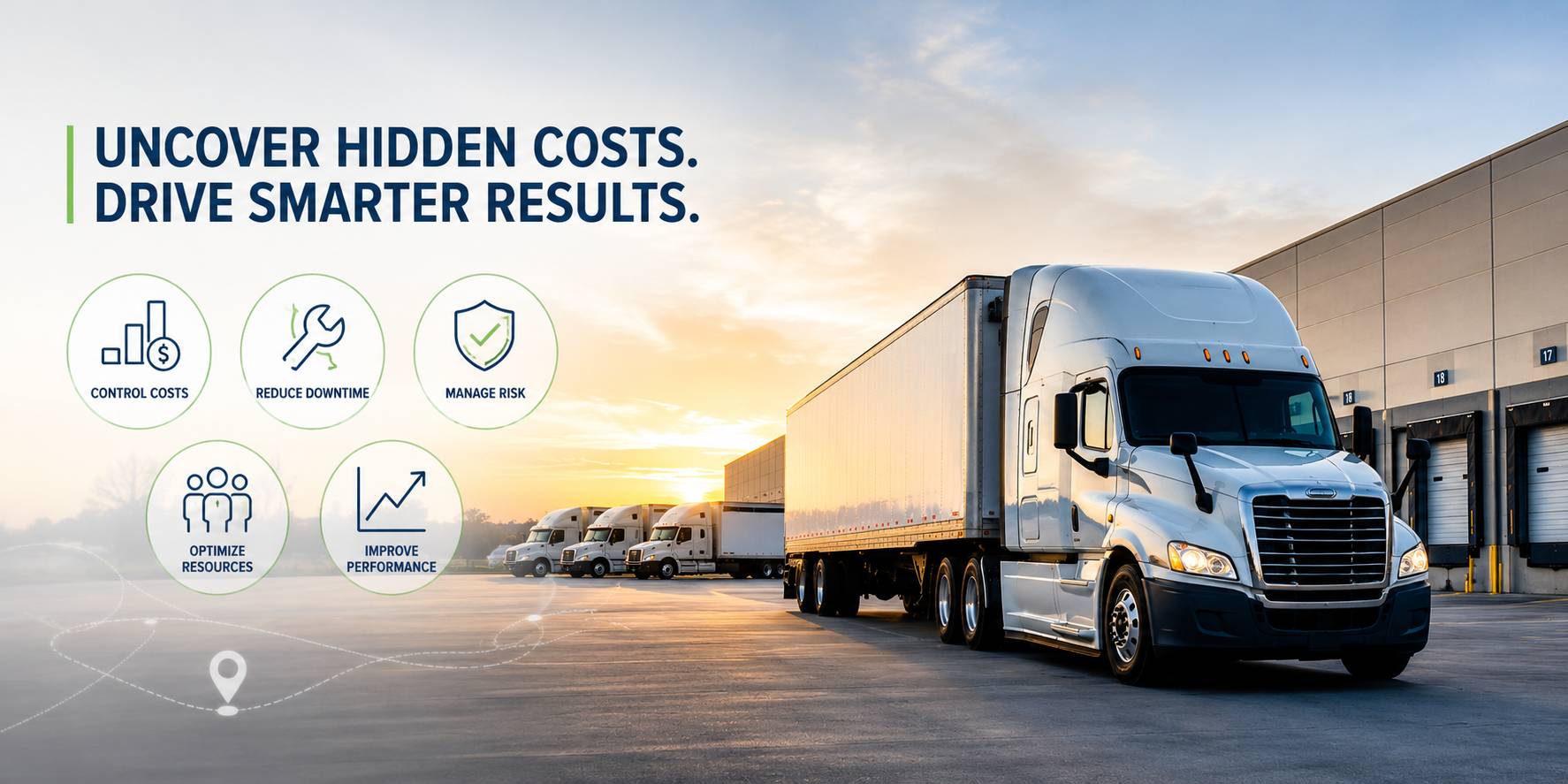
For many companies, operating a private fleet has long been seen as the gold standard for transportation control. Ownership promises flexibility, brand visibility, and direct oversight of service performance.
But as supply chains become more complex and labor, equipment, and regulatory pressures increase, transportation leaders are beginning to ask a more strategic question: What are the true private fleet costs?
The answer often extends far beyond fuel, trucks, and driver wages.
In reality, the most significant private fleet costs are frequently hidden within operational inefficiencies, asset utilization gaps, and management complexity. These overlooked expenses can quietly erode margins—even when the fleet appears efficient on the surface.
For transportation executives and supply chain leaders evaluating long-term strategy, understanding the full economic picture of fleet ownership has become essential.
High-performing organizations are discovering that the most valuable insight isn’t simply how much their fleet costs—but how those costs compare to alternative operating models.
Why Private Fleet Costs Are Often Underestimated
Most organizations track direct expenses carefully: driver payroll, fuel consumption, maintenance invoices, and equipment depreciation.
However, many fleet operating costs are distributed across departments or buried within broader operational budgets.
This fragmented visibility makes it difficult for leadership teams to evaluate the true economics of fleet ownership.
Some of the most commonly overlooked cost drivers include:
-
- Administrative overhead for recruiting, compliance, and HR management
-
- Equipment downtime and underutilized assets
-
- Insurance premiums tied to safety performance
-
- Technology systems for telematics, routing, and compliance
-
- Facility expenses for parking, maintenance, and dispatch operations
When these factors are aggregated, the actual cost structure of a private fleet often looks very different than expected.
The Operational Complexity Behind Private Fleet Management
Beyond financial expenses, many organizations underestimate the operational demands of fleet ownership.
Running a fleet requires managing an ecosystem of interconnected responsibilities that extend well beyond transportation planning.
These private fleet management challenges can quickly become resource-intensive for companies whose core expertise lies outside transportation.
Fleet operators must continuously manage:
-
- Driver recruitment and retention
-
- Regulatory compliance and safety monitoring
-
- Vehicle lifecycle management
-
- Maintenance scheduling and parts inventory
-
- Routing optimization and dispatch coordination
Each of these areas requires specialized knowledge, systems, and leadership oversight.
When organizations underestimate the complexity involved, fleet performance often becomes inconsistent, and costs rise quietly over time.
Five Hidden Cost Drivers That Impact Fleet Economics
Understanding where hidden expenses originate is the first step toward improving fleet performance.
Across the transportation industry, several recurring cost drivers consistently influence the total cost of fleet ownership.
1. Asset Utilization Gaps
Private fleets often experience periods of underutilization.
Seasonal demand shifts, route imbalances, and inconsistent delivery volumes can leave trucks sitting idle while fixed costs continue to accumulate.
Low asset utilization increases the effective cost per mile and inflates overall private fleet costs.
2. Driver Turnover and Labor Volatility
The driver labor market remains one of the most unpredictable cost variables in transportation.
Recruiting, onboarding, and retaining drivers requires significant investment in:
Frequent turnover disrupts operations and increases the long-term cost of maintaining a stable fleet workforce.
3. Maintenance and Downtime
Equipment reliability directly affects delivery performance and operational cost efficiency.
Unexpected breakdowns lead to cascading expenses:
-
- Customer service disruptions
Even well-managed fleets must continuously invest in preventative maintenance to avoid these disruptions.
4. Regulatory and Compliance Exposure
Transportation regulations continue to evolve, placing greater administrative responsibility on fleet operators.
Compliance oversight includes:
-
- Driver qualification management
-
- Hours-of-service monitoring
-
- Vehicle inspection documentation
-
- Safety audits and reporting
These regulatory obligations add both direct costs and operational complexity.
5. Technology and Data Management
Modern transportation operations rely heavily on digital infrastructure.
Telematics platforms, route optimization systems, compliance software, and maintenance tracking tools all contribute to rising fleet operating costs.
While these systems improve performance, they also require ongoing investment and internal expertise to manage effectively.
When Outsourced Fleet Solutions Enter the Conversation
As private fleet costs become more complex to manage, many organizations are reevaluating whether full ownership is the most efficient operating model.
This has led to growing interest in outsourced fleet solutions and dedicated transportation partnerships.
Instead of managing every operational component internally, companies can shift responsibility for equipment, drivers, and maintenance to specialized transportation providers.
This approach can offer several advantages:
-
- Predictable cost structures
-
- Access to specialized transportation expertise
-
- Reduced administrative burden
-
- Scalable capacity during demand fluctuations
-
- Improved operational resilience
For some organizations, this model allows internal teams to focus more fully on core business operations.
Comparing Dedicated Transportation Costs vs. Fleet Ownership
When evaluating alternatives to fleet ownership, transportation leaders often compare their existing cost structure with dedicated transportation costs.
Dedicated transportation arrangements typically include:
While the pricing model differs from direct ownership, the broader value often lies in operational predictability and risk transfer.
Rather than absorbing fluctuating fleet operating costs internally, organizations can convert many of those variables into structured service agreements.
This shift doesn’t eliminate transportation costs—it simply changes how they are managed.
What Transportation Leaders Should Evaluate in 2026
As transportation networks evolve, more companies are reassessing how their fleets support long-term supply chain strategy.
Executives should evaluate several critical questions:
-
- Are fleet assets consistently utilized at optimal capacity?
-
- How much internal time is spent managing transportation operations?
-
- Are hidden administrative costs distorting the real cost structure?
-
- Does the current fleet model provide flexibility during demand shifts?
-
- Could specialized transportation partners improve efficiency?
These questions often reveal opportunities to improve cost visibility and operational performance.
The goal isn’t necessarily to eliminate private fleets—but to ensure they operate within a strategic, economically sound framework.
Strategic Takeaway
Private fleets continue to play an important role in many supply chains, particularly when service control and brand presence are critical.
However, the economics of fleet ownership have become more complex than many organizations realize.
The most significant private fleet costs are often hidden within operational inefficiencies, administrative overhead, and underutilized assets.
Transportation leaders who regularly reassess these factors are better positioned to build resilient, cost-effective delivery networks.
In today’s logistics environment, strategic fleet decisions require more than operational familiarity—they require a full understanding of the cost structure behind every mile.
Call to Betterment
Many organizations track fuel expenses and maintenance bills closely.
But the most important insights often emerge when companies examine the full operational picture behind their fleets.
Greater visibility into true cost structures enables smarter decisions about capacity, partnerships, and long-term transportation strategy.
👉 Uncover the true cost of your fleet—not just what shows up on paper.